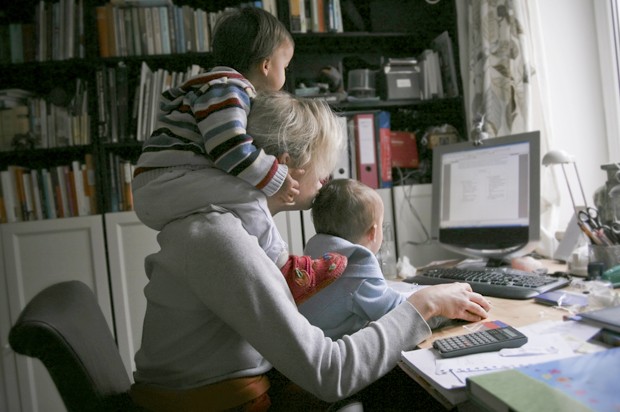
Whoever coined the phrase “working from home” never tried to send an email while a three-year-old used their leg as a climbing wall or attempted to lead a Zoom meeting with a toddler screaming “I NEED A SNACK” in the background.
Remote work with toddlers is an Olympic-level juggling act performed without a net, and half the time, without pants.
Here’s the truth no one tells you: there is no perfect system. But there are strategies that can help you survive, stay employed, and maybe even keep most of your sanity intact.
Acknowledging the elephant in the room
Working from home with a toddler is essentially doing two full-time jobs simultaneously, and doing neither as well as you’d like.
That guilt you’re feeling? Completely normal. The frustration when your little one has a meltdown during your most important call of the week? Valid. The days when you wonder if you’ve uttered a single sentence to another adult that wasn’t interrupted? We’ve all been there.
The pandemic normalised remote work, but it also created the unrealistic expectation that parents could seamlessly be both productive employees and attentive caregivers at the same time. Spoiler alert: that’s impossible.
Setting realistic expectations (for everyone)
The first step to surviving is accepting that “thriving” might need to be redefined. Some days, success means everyone is fed, your most urgent tasks are complete, and nobody cried in a video meeting. That’s enough.
Have an honest conversation with your employer about your situation. Discuss flexible scheduling options – could you work early mornings or evenings when your partner can tag in? Can you delegate some meetings?
Equally important is setting expectations with your toddler, though we know this has limited effectiveness with the under-five crowd. Even young children can begin to understand simple concepts like “Mummy has a work call” if reinforced consistently with visual cues like closing a door or wearing specific “work headphones.”
Structure in the chaos
Toddlers thrive on routine, and so do parents trying to work from home.
Establish consistent blocks of time for different activities. This doesn’t mean rigid schedules, but rather predictable patterns they can recognise.
Consider creating a visual schedule using pictures. Even toddlers can understand symbols: a picture of blocks for playtime, a snack for snack time, a book for quiet time. This helps them anticipate what’s coming next and gives them a sense of control, reducing the constant “what are we doing now?” interruptions.
Save your most demanding tasks for nap time or early morning, schedule meetings during times when your child typically plays independently, and accept that you might need to split your workday into unconventional chunks.
The secret weapon
Create a stash of toys, activities, or treats that only come out during your work hours. These shouldn’t be everyday items but special things that capture your toddler’s attention precisely because they’re novel.
Think magnetic tiles, new colouring books, play dough in exciting colours, or yes, the carefully curated screen time you’ve been saving.
Rotate these items regularly to maintain their appeal. What works one week might be boring the next, so having a variety to cycle through is essential.
Let’s talk about screen time
Here’s the permission you’re looking for: screen time is not going to ruin your child. During remote work hours, age-appropriate educational content or engaging shows can be a legitimate tool in your survival kit.
That said, be strategic about it. Use screen time during your most critical work hours, not as an all-day babysitter. Choose quality content when possible, and don’t let guilt consume you on days when your toddler watches more than usual. You’re doing your best in an impossible situation.
The snack strategy
Never underestimate the power of strategic snacking. Pre-portion healthy snacks in small containers your toddler can access independently. This reduces the constant “I’m hungry” interruptions and teaches self-sufficiency.
Similarly, have an easily accessible water bottle or sippy cup within their reach. Reducing the frequency of basic need requests gives you longer stretches of uninterrupted work time.
Tag-teaming when possible
If you have a co-parent or partner at home, divide and conquer. Create clear boundaries about who’s on toddler duty when, even if you’re both working from home.
Consider scheduling your most demanding work for different times if you can. One parent takes morning meetings while the other handles toddler breakfast and play; switch for the afternoon. During designated work blocks, the off-duty parent should fully take over childcare, even if that means leaving the house for a park trip.
The art of the quick reset
When your toddler becomes dysregulated and your work suffers, sometimes a 15-minute reset is more productive than struggling through an hour.
Take them outside for a quick run around the yard, do a silly dance party, or engage in five minutes of focused play. This attention investment often buys you longer periods of independent play afterward.
And when nothing is working…
Some days, no strategy will work. Your toddler will be off their routine, teething, or simply having a terrible day. On those days, give yourself permission to call in reinforcements.
Having a backup plan for these emergency situations is crucial. This might be a trusted friend or family member who can come over on short notice, a drop-in childcare facility, or an understanding with your employer about occasional crisis days.
Final reminder: Be kind to yourself. Lower your expectations. Ask for help. And on the days when you simply survive, know that survival is enough.
You’re teaching your child that work matters, that parents have responsibilities beyond childcare, and that sometimes we all have to be flexible and patient. Those are valuable lessons, even if they’re delivered imperfectly between Zoom meetings and snack requests.
The 9-to-5 looks different when you’re doing it with a tiny human who thinks your keyboard is a toy and your lap is always available. But you’re making it work, one interrupted email at a time.