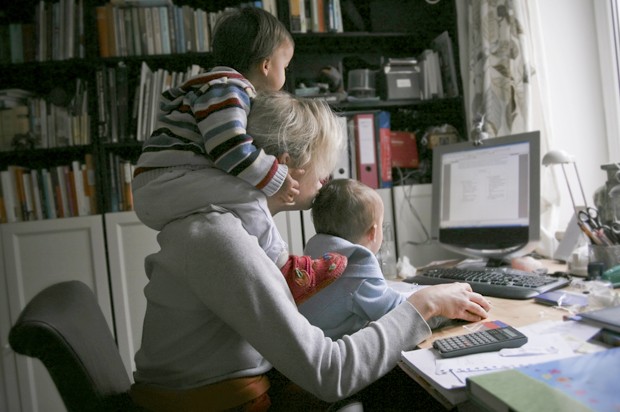
If you have a high energy child, you know they need to burn off that energy or your home becomes a demolition zone, but most energy-burning activities create chaos that takes hours to clean up.
It’s exhausting watching them bounce off the walls, but the thought of glitter, paint, or sensory bins scattered across your floor is enough to make you want to just turn on the TV and call it a day.
Good news: you can tire out your tiny tornado without turning your home into a disaster area. These activities are designed for kids who need to move, jump, run, and expend serious energy – all while keeping the cleanup minimal and your sanity intact. No, really. We’re talking activities you can actually sustain on a Tuesday afternoon when you’re already tired.
1. Painter’s tape obstacle course
Painter’s tape is a high energy parent’s best friend. It sticks to floors and walls without leaving residue, peels off easily, and costs almost nothing. Use it to create an indoor obstacle course your kids have to navigate. Make lines to balance on, squares to jump between, zig-zag patterns to follow, or a complex maze they have to crawl through without touching the tape.
Let your kids help design it, adding challenges like hopping on one foot, walking backward, or doing specific movements at certain points. When they’re done, peeling up the tape can be its own satisfying activity.
The mess factor: Virtually zero. Just tape and floor.
Energy burn: High. Expect at least 30-45 minutes of engaged activity if you make the course complex enough.
2. Dance party freeze
Crank up the music and let your kids dance wildly. Jumping, spinning, flailing, whatever moves their bodies want to make. When you pause the music, they have to freeze completely in whatever position they’re in. Anyone who moves is out (or has to do five jumping jacks, or loses a point, depending on how competitive your household is).
You can add variations like “freeze in an animal pose” or “freeze on one foot” to increase the challenge.
The mess factor: None, unless you count the sweaty kid who needs a water break.
Energy burn: Extremely high. This is a full cardio workout disguised as fun.
3. Indoor bowling
Set up plastic cups, empty water bottles, or even toilet paper rolls at the end of a hallway. Use a soft ball (foam, playground ball, or even a rolled-up sock) to knock them down.
To increase the energy expenditure, make them run to retrieve the ball after each roll, do a specific exercise between turns, or require them to set up the pins themselves each time.
The mess factor: Minimal. You’re using items that are already in your home, and there’s nothing to spill, break, or scatter.
Energy burn: Moderate to high, depending on how much running you incorporate.
4. Balloon keep-up challenge
Blow up a balloon (or several) and challenge your kids to keep it from touching the ground. Sounds simple, but it requires constant movement, jumping, running, and coordination. Add rules like “you can only use your head” or “you have to keep two balloons up at once” or “you can’t use your hands” to increase the difficulty.
Time how long they can keep it up, then challenge them to beat their record.
The mess factor: One balloon. That’s it.
Energy burn: Surprisingly high. This is basically interval training for kids.
5. Scavenger hunt
Create a list of items for your kids to find around the house. You can make this as simple or complex as their age allows: “find something red,” “find three things that start with ‘B’,” “find something soft,” or “find the toy dinosaur hiding in the living room.”
For high-energy kids, make them run between items, do a physical challenge at each location (five jumping jacks before moving to the next item), or race against a timer. You can also do photo scavenger hunts where they take pictures of items instead of collecting them, which eliminates the cleanup of having items strewn everywhere.
The mess factor: Minimal if you specify they should leave items where they find them or take photos.
Energy burn: Moderate to high, especially if you incorporate physical challenges and keep them moving quickly.
6. Simon Says (extreme edition)
Every command should involve movement: “Simon says do ten jumping jacks,” “Simon says run in place for thirty seconds,” “Simon says hop on one foot to the kitchen and back,” “Simon says do your best Superman pose while standing on one leg.”
This is basically a disguised HIIT workout. Kids love it because it feels like a game, and they’re so focused on following commands that they don’t realise they’re exhausting themselves. Older kids can take turns being Simon, which gives you a much-needed break.
The mess factor: Zero. Just bodies moving in space.
Energy burn: Very high. Genuine exercise masked as play.
7. Indoor “camping”
Set up a blanket fort or tent (actual camping tent or just draped blankets over furniture). Once established, this becomes home base for multiple activities. They can transport stuffed animals to the “campsite” one at a time, crawl in and out repeatedly, play hide and seek with the fort as base, or do “camping activities” like telling stories with flashlights.
The key is making them move around the fort, not just sit in it. Create missions: gather supplies from around the house, make trips to the “river” (bathroom) for water, or complete physical challenges to “earn” camping badges.
The mess factor: Low. Yes, you have blankets or a tent out, but breaking down camp is quick, and everything was already in your house.
Energy burn: Moderate. The fort itself isn’t high-energy, but the activities around it can be.
8. Masking tape track for cars
Use painter’s or masking tape to create an elaborate road system on your floor for toy cars. Make highways, bridges (tape over pillows), parking garages, and intersections. But here’s where the energy comes in: the kids have to “be” the cars.
They crawl, scoot, or walk along the tape roads making car sounds, stopping at stop signs you draw, parking in specific spots, or racing each other. For bigger kids, they can push themselves on their bottom along the tracks or do more complex movements.
The mess factor: Just tape and toys that go back in the toy box. The tape peels up easily when you’re done.
Energy burn: Moderate to high, depending on the size of your track and the speed at which they “drive.”
9. Target practice
Set up various “targets” around a room: laundry baskets, large bowls, boxes, hula hoops laid on the floor, or even just tape marks on the wall. Give your kids soft projectiles: bean bags, balled-up socks, soft foam balls, or crumpled paper. Challenge them to hit each target, awarding points for accuracy.
Make them stand increasingly far away, throw with their non-dominant hand, toss backward through their legs, or complete a physical task between throws (run around the couch before your next toss). This combines coordination practice with constant movement.
The mess factor: Very low. Soft items that are easy to gather up, and you’re using containers already in your home.
Energy burn: Moderate. The throwing isn’t exhausting, but the moving between targets and completing challenges adds up.
10. Floor is lava
The classic game that never gets old. The floor is lava, and kids have to move around the room using only furniture, pillows, cushions, or designated “safe spots” you’ve laid out. They can’t touch the floor, which requires creative problem-solving and lots of jumping, balancing, and climbing.
Make it more challenging by removing safe spots as they play, adding timed elements (“get from the couch to the kitchen in under one minute”), or requiring them to transport items while playing (carry this stuffed animal to safety).
The mess factor: Low. Cushions and pillows come from your couch and go back. If kids start dragging out excessive props, set a limit before playing.
Energy burn: Very high. This is a full-body workout involving strength, balance, and coordination.
The real goal
Let’s be honest: the point of these activities isn’t to stimulate your child’s creativity or advance their development (though those are nice side effects). The real goal is to tire them out enough that they’ll sit still for dinner, cooperate with bedtime, or give you twenty minutes of peace to accomplish something from your to-do list.
There’s no shame in that. High-energy kids are wonderful – their enthusiasm, physicality, and boundless curiosity are gifts. But they’re also exhausting, and finding ways to channel that energy without creating more work for yourself isn’t lazy parenting, it’s smart.
These activities honour what your child needs (movement, challenge, engagement) while respecting what you need (manageable cleanup, sustainable effort, maintained sanity).
So the next time your child is ricocheting off the walls and you’re eyeing the craft supplies with dread, remember: painter’s tape, a balloon, and some creativity can save the day without destroying your house. And honestly? That’s the kind of parenting win worth celebrating.